
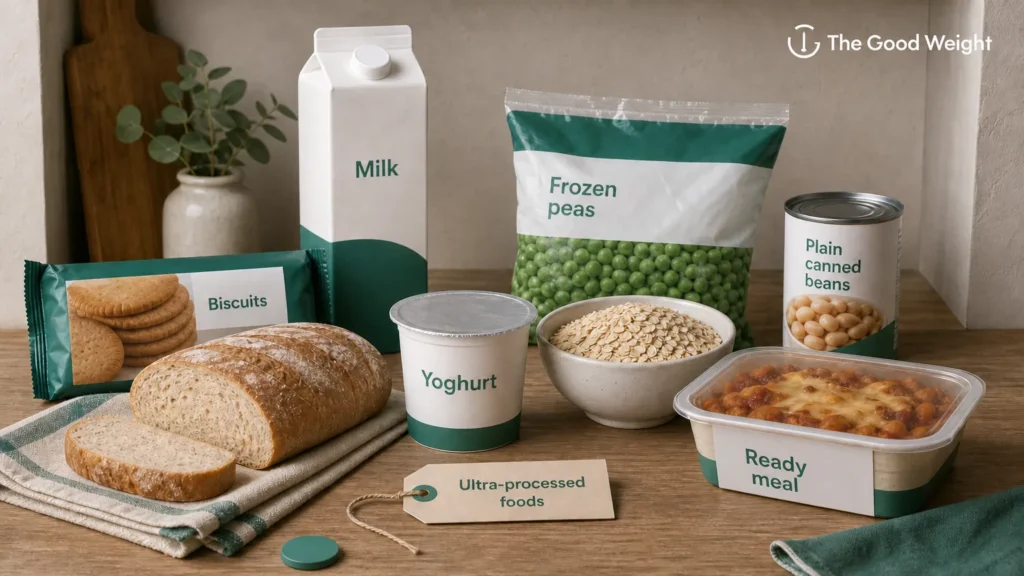
A carton of milk, frozen peas and a packet of biscuits can share a shopping bag without belonging to the same food category. All have undergone processing, but that word covers everything from freezing vegetables to assembling snack products from refined ingredients. Packaging alone tells you surprisingly little.
That distinction matters when headlines about ultra-processed foods make your kitchen cupboard feel like a problem to solve. If you’re managing obesity or worried about diabetes, you deserve more useful guidance than “stop eating anything from a packet.” A busy Chennai workday doesn’t become less demanding because someone recommends cooking every meal from scratch.
Processing deserves attention. But the practical questions are more specific: What does the food contain, how easily do you eat past fullness, and what would you eat instead? A packaged food that helps you assemble dinner plays a different role from a snack you repeatedly eat alongside dinner.
I’d start with that distinction, not a cupboard clear-out. The aim is to find changes that support weight goals without making eating expensive, exhausting or frightening. Your food choices need to work on ordinary Tuesdays, not only on weekends when you have time to cook.
What are ultra-processed foods in an everyday basket?
Ultra-processed foods are industrial formulations made largely from food-derived substances, often with ingredients used to adjust flavour or texture. The widely used NOVA classification distinguishes them by the nature and purpose of processing. It does not classify every packaged food as ultra-processed.
Minimally processed foods include plain milk, oats and frozen vegetables. Washing, pasteurising or freezing changes these foods without turning them into industrial formulations. Culinary ingredients, such as oil and sugar, occupy a separate category because people mainly use them in cooking.
Packaged convenience foods cross several categories. Plain canned beans may contain only beans, water and salt, while a ready-to-eat snack may contain refined starches, flavourings and emulsifiers. Bread, yoghurt and breakfast cereals can fall into different groups depending on their formulation.
So the packet isn’t the verdict. Neither is the number of ingredients: a long list of spices differs from a long list of substances used to reconstruct texture. Classification can flag something worth examining, but it cannot replace a nutrition assessment or explain a food’s role in your life.
Does eating more automatically cause weight gain?
A biscuit and a fortified high-fibre cereal may share a processing category while contributing differently to someone’s diet. That creates a difficult research problem: investigators must separate processing from nutrient composition and eating behaviour. Short-term metabolic responses and long-term weight changes also answer different questions.
A 2026 randomised crossover study of 57 healthy-weight adults found greater insulin and energy responses, alongside lower carbohydrate oxidation, after nutritionally similar ultra-processed meals compared with non-ultra-processed meals. In a crossover design, participants experience both conditions, helping researchers compare responses within the same person. The findings suggest that a nutrient comparison may not capture every metabolic difference between meals.
But those results don’t establish that every product causes weight gain. Lower carbohydrate oxidation means less carbohydrate was being used as fuel during the measurement period; it does not, by itself, prove increased body-fat storage. Nor can responses in healthy-weight adults be assumed to match those in people with diabetes or obesity.
In a separate 2026 behavioural weight-management study of 449 adults, larger reductions in the percentage of calories from ultra-processed foods were associated with greater weight loss, even after adjustment for calorie-intake change, although effect sizes were small. That is an association within a weight-management programme, not proof that processing independently caused the difference. Adjusting for reported calorie changes also cannot remove every measurement error or competing explanation.
The thing is, calories and processing aren’t rival explanations. A food’s texture or convenience may affect how quickly and how much someone eats, while its nutritional composition matters too. Researchers are still working out which features, and which specific products, contribute most.
A label-reading decision tree that starts with the meal
Before examining additives, ask what job the food will do. Is it lunch, part of lunch, or an extra eaten while lunch heats up? That answer often tells you more about the next useful change than a front-of-pack health claim.
-
Check the ingredient pattern. Look for recognisable food ingredients, then notice flavourings or ingredients used mainly to alter texture. These can help identify an industrial formulation, but they don’t establish that an individual ingredient is harmful. Use the pattern as a prompt for closer comparison, not an automatic rejection.
-
Compare protein and fibre. Read the amounts in the portion you will actually eat, not only per 100 grams. If the product is standing in for a meal, check whether it includes a useful protein source and fibre-containing foods. The Good Weight’s guide to building protein into balanced Indian meals can help you assess the whole plate.
-
Inspect the package size. Check how many servings the manufacturer lists and whether that matches your routine. A resealable family bag still requires a stopping decision each time you reach inside. If that decision feels difficult, portion some into a bowl before eating.
-
Assess sweetness and drinkability. Compare added sugar between similar products, while remembering that “no added sugar” is not a complete nutritional assessment. Ask whether you drink the product alongside a meal or use it instead of one. A sweetened beverage and a medically recommended nutrition drink need different judgments.
-
Notice your eating experience. Can you eat the product very quickly, and do you repeatedly continue beyond comfortable fullness? Personal patterns matter more than whether another person finds the same food easy to portion. Change the serving arrangement or substitute something more satisfying before imposing a ban.
-
Check replacement versus addition. A ready meal that replaces a missed dinner may solve a problem. A snack added after an adequate dinner has a different role. Keep the useful convenience, then examine extras that have become automatic.
Convenience changes for the days that don’t go to plan
At 9 p.m., the choice may be between a ready meal and takeaway, not between a ready meal and freshly cooked millet with vegetables. Work with that reality. The following often, sometimes and depends labels describe possible roles, not permanent rankings of foods.
Busy workdays: Often, use a repeatable lunch such as rice with dal and vegetables, including bought or batch-cooked components. Sometimes, choose a ready meal and add plain curd or another suitable protein food if the meal needs it. Depends: a meal-replacement shake may serve a clinical plan, but an ordinary snack drink may leave lunch incomplete.
Travel: Often, pack something practical, such as whole fruit with a measured portion of nuts or roasted chana, if these suit you. Sometimes, a packaged sandwich is the most workable meal available. Depends: a protein bar might help bridge a long gap, but eating one automatically after a full meal changes its role.
Tea-time: Often, pair tea with a planned snack, such as plain yoghurt or a small bowl of sundal. Sometimes, enjoy biscuits by putting the amount you want on a plate instead of keeping the packet beside your laptop. Depends: a “digestive” or “multigrain” label tells you less than the ingredients and the portion you actually eat.
Late returns home: Often, keep frozen vegetables and a quick protein option available, with rice or another familiar staple. Sometimes, use instant noodles as a base and add vegetables with egg or tofu, while checking the seasoning’s salt content. Depends: a frozen dinner may fit your routine better than skipping food and grazing for hours.
No culinary heroics required. The useful change might be stocking two dependable dinners, not preparing twenty containers every Sunday. For more meal-building ideas, start with real meals without restrictive food rules.
When a stricter rule needs clinical review
A prescribed nutrition drink after bariatric surgery is not interchangeable with an everyday soft drink. Both may involve extensive processing, yet their purposes differ. Removing a product without checking its clinical role can work against a treatment plan.
With diabetes risk or established diabetes, review carbohydrate portions and meal timing alongside your medication. With digestive symptoms, discuss the specific food, amount and symptom pattern instead of excluding an entire processing category. Broad restrictions can make it harder to identify what you tolerate.
If eating involves loss of control, guilt or repeated restriction followed by overeating, seek support before tightening the rules. After a weight-loss procedure, follow your team’s staged guidance on texture and protein. During GLP-1 treatment or other medication-related appetite changes, an individual review can check whether reduced intake is meeting your needs.
Look, a shorter ingredient list cannot answer those clinical questions. Doctor-led treatment and nutrition support can put the label in context. Persistent vomiting or difficulty keeping fluids down needs prompt medical advice, not another pantry swap.
Questions that come up in the grocery aisle
Do I need to stop eating packaged bread?
No. Compare the bread’s ingredients and nutritional content, then assess the portion and what you eat with it. Bread that helps you assemble a workable meal deserves a different assessment from food you eat repeatedly without satisfaction.
Is homemade food always better for weight goals?
No. A homemade recipe can still contain large amounts of sugar or fat, and portion size still matters. Home cooking gives you control over ingredients, but it doesn’t make the resulting meal automatically suited to your needs.
Should I calculate my daily percentage from these foods?
You don’t need to start there. Reviewing repeated situations, such as sweetened drinks with lunch or unplanned evening snacks, may reveal a simpler change. If tracking makes you anxious or rigid around food, discuss a less numerical approach with your care team.
Bring your actual week, not your ideal week
For a personalised metabolic-health consultation, bring a typical week of meals, including packaged-food labels or photographs. Include the hurried breakfasts and late dinners, not only the meals you feel pleased with. Your health history and treatment needs belong in that conversation too.
The goal is to identify which changes deserve your effort and which conveniences are helping you eat adequately. Processing is one consideration; the food, portion, frequency and overall eating pattern remain part of the decision. Bring that ordinary week to The Good Weight for personalised, doctor-led weight care.
