
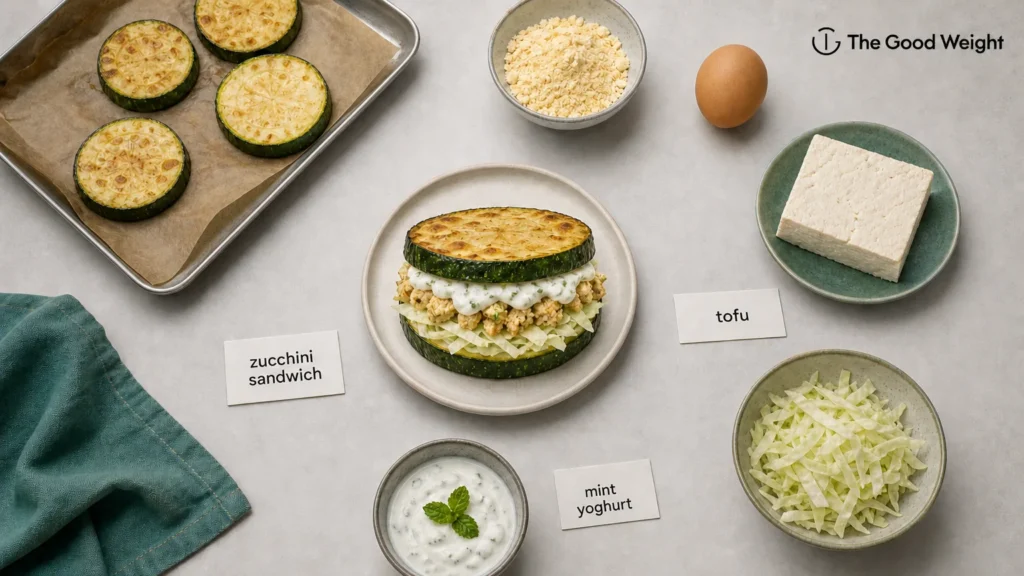
A zucchini bun can look crisp in a video, then turn soft and watery before lunch. Even when it holds together, a filling of cheese and mayonnaise may leave you with a rich snack rather than a balanced meal. This zucchini sandwich recipe addresses both problems: remove moisture before baking, then add a substantial protein filling, vegetables and a modest amount of sauce.
Vegetables deserve space at lunch, but they do not need to replace every other food group. In a 2019 US survey, only about one in ten adults met vegetable intake recommendations. That finding supports making vegetables more convenient – not assuming that a vegetable-based sandwich automatically provides everything a meal needs.
1. Decide whether this is lunch or a side dish
Two small zucchini rounds with a little cheese work well as a snack or side. For lunch, use the rounds as a base for a meaningful portion of tofu, eggs or chicken, plus vegetables for texture and variety. Protein, fibre-containing foods and an adequate overall portion matter more than whether the sandwich resembles a social-media version.
Start with one filled sandwich per person, then adjust to appetite, activity and your eating plan. Add fruit, beans or a small wholegrain accompaniment if the meal feels incomplete; bread and other carbohydrates are not automatically obstacles to weight management. The CDC explains that vegetables can add volume while replacing some higher-calorie ingredients, rather than simply being added on top of an unchanged meal.
2. Prepare zucchini buns that hold together
Ingredients and portions
Makes: four flat rounds, enough for two sandwiches
Preparation: approximately 20 minutes
Baking: 22-28 minutes, plus 10 minutes cooling
- 400 g zucchini, approximately two medium
- ¼ teaspoon salt
- 1 large egg
- 3 tablespoons besan, plus extra only if needed
- ½ teaspoon roasted cumin powder
- ¼ teaspoon black pepper
- 1 tablespoon chopped coriander
- 1 teaspoon oil, for brushing baking parchment
These are flat vegetable patties, not risen bread buns. Besan and egg provide structure without requiring a thick layer of melted cheese. Zucchini moisture varies, so use the mixture’s consistency – not extra flour alone – to guide adjustments.
Step 1: Grate, salt and squeeze
Wash your hands, rinse the zucchini under running water and trim the ends. The FDA recommends washing produce under running water without soap or detergent. Coarsely grate the zucchini, keeping the skin unless your dietary plan calls for peeling.
Toss with the salt and leave in a colander for 10 minutes. Transfer to a clean tea towel and squeeze firmly in several small batches until the shreds no longer drip readily. This moisture-removal step is for texture; it does not replace washing or safe handling.
Step 2: Bind and shape
Heat the oven to 200°C conventional or 180°C fan. Mix the squeezed zucchini with the egg, besan, cumin, pepper and coriander, then let it stand for five minutes. The mixture should hold a mound without a puddle forming underneath; if necessary, squeeze more moisture out before adding besan a teaspoon at a time.
Line a metal tray with baking parchment – not wax paper – and brush it lightly with oil. Divide the mixture into four rounds, approximately 10 cm wide and 6-8 mm thick, leaving space between them. Keep the thickness even so the centres cook before the edges become too dark.
Step 3: Bake and cool
Bake for 15-18 minutes, until the undersides are firm enough to lift with a wide spatula. Turn carefully and bake for another 7-10 minutes, until both surfaces are lightly browned and the centres are set, with no wet egg mixture. Ovens vary, so use those signs alongside the timing.
Let the rounds rest for five minutes before moving them to a rack for another five minutes. Cooling allows steam to escape and makes them easier to handle. Fill just before eating; warm rounds enclosed around wet fillings will soften again.
Binding and slicing alternatives
For an egg-free version, try four tablespoons of besan and add water only a teaspoon at a time if the squeezed zucchini mixture will not combine. Expect a softer result, and use a knife and fork if needed rather than adding large amounts of cheese. If you prefer sliced zucchini, cut lengthways into roughly 5 mm planks, salt and pat dry, then roast in one layer until tender with dry surfaces; these make an open sandwich base, not a joined bun.
3. Assemble three balanced fillings
Vegetarian: tofu, cabbage and mint yoghurt
For one sandwich, use 100-120 g firm tofu, drained, patted dry and pan-seared with cumin and pepper. Add ½ cup finely shredded cabbage and carrot, plus one tablespoon thick plain yoghurt mixed with mint. Let the tofu cool slightly, then layer everything between two zucchini rounds.
Tofu supplies the main protein component instead of relying on cheese for bulk. Substitute paneer if preferred, while keeping creamy sauce modest, or use unsweetened soy yoghurt for a dairy-free filling. Adjust chilli and lemon to taste without making the mixture runny.
Egg-based: chopped eggs with crunchy vegetables
Combine two fully cooked eggs with one tablespoon thick plain yoghurt, pepper and chopped coriander. Add lettuce and a few cucumber slices that have been patted dry. Chop rather than finely mash the eggs if you prefer more texture.
Skip extra cheese initially; taste the assembled filling before deciding it needs more richness. Mustard or a little mint chutney can provide flavour without several spoonfuls of mayonnaise. If raw onion causes discomfort, leave it out or substitute cooked capsicum.
Lean non-vegetarian: chicken tikka-style filling
Use 90-100 g cooked, skinless chicken, sliced or shredded, with cumin, paprika and lemon. Add lettuce, cooked capsicum and one tablespoon thick mint yoghurt. Keep raw chicken and its utensils separate from ready-to-eat vegetables, and use chicken that has been safely cooked and stored.
Avoid pouring leftover cooking juices into the sandwich, as these quickly soften the base. Cooked fish can replace chicken, provided it is checked for bones. For more familiar lunch rotations, explore these protein- and fibre-rich Indian lunch boxes.
4. Check the whole meal before calling it low-carb
Replacing bread changes a meal, but does not establish its nutritional value. Besan, yoghurt, vegetables and sauces still contribute carbohydrates, and the amount depends on the ingredients and portions used. Without calculating the complete recipe, treat “low-carb” as a description to check rather than a guaranteed claim.
Before serving, compare your sandwich against this checklist:
- Protein: Is there a substantial filling, rather than only a cheese sprinkle?
- Fibre: Are there vegetables, pulses or another fibre-containing accompaniment?
- Saturated fat: Have cheese, butter and creamy sauces accumulated?
- Sodium: Are salt, chutney, pickles and packaged sauces overlapping?
- Portion: Does the full lunch suit your needs, including sides and drinks?
- Satisfaction: Does it keep you comfortably satisfied until your next planned meal?
Use your afternoon hunger as feedback, not a judgement on willpower. If lunch repeatedly feels inadequate, increase the protein portion or add a suitable accompaniment. Consistent, satisfying meals are more useful than making the sandwich progressively smaller.
5. Common preparation problems and simple fixes
Why do the rounds stick or break?
Use lightly oiled baking parchment and wait until the underside has set before turning. A wide spatula supports more of the round than tongs do. If they still break, make smaller rounds and check that the mixture was thoroughly squeezed.
Why does the sandwich leak water?
Check both the base and the filling. Squeeze the zucchini more firmly next time, cool the baked rounds on a rack, and blot cucumber or tomato before assembling. Pack fillings separately for later, and keep perishable ingredients chilled during storage and transport.
Why does it taste bland or turn heavy?
Try roasted cumin, pepper, coriander or lemon zest before adding more salt. Excess besan can make the base dense, so remove water rather than continually adding flour. Thick chutney or yoghurt adds flavour more effectively than a large quantity of watery sauce.
6. When this lunch needs individual adjustment
A substantial carbohydrate reduction may need medication review if you use insulin or medicines that can cause low blood glucose. Follow your prescribed monitoring plan and do not change doses yourself. The Good Weight explains why lower-carb eating may need medical supervision.
Digestive concerns may affect tolerance of besan, cabbage, raw vegetables or larger meals. After bariatric surgery or an endoscopic procedure, follow your care team’s prescribed textures and portions rather than assuming this sandwich suits every stage. Ask your clinician or dietitian about adaptations.
The key is a dry, well-bound base paired with protein, vegetables and enough food to make lunch satisfying. For convenient Indian meals tailored to your schedule, medical needs and weight goals, discuss a personalised nutrition plan with The Good Weight care team.
